
Why Choose Custom Silicone Gifts for Your Promotional Needs?
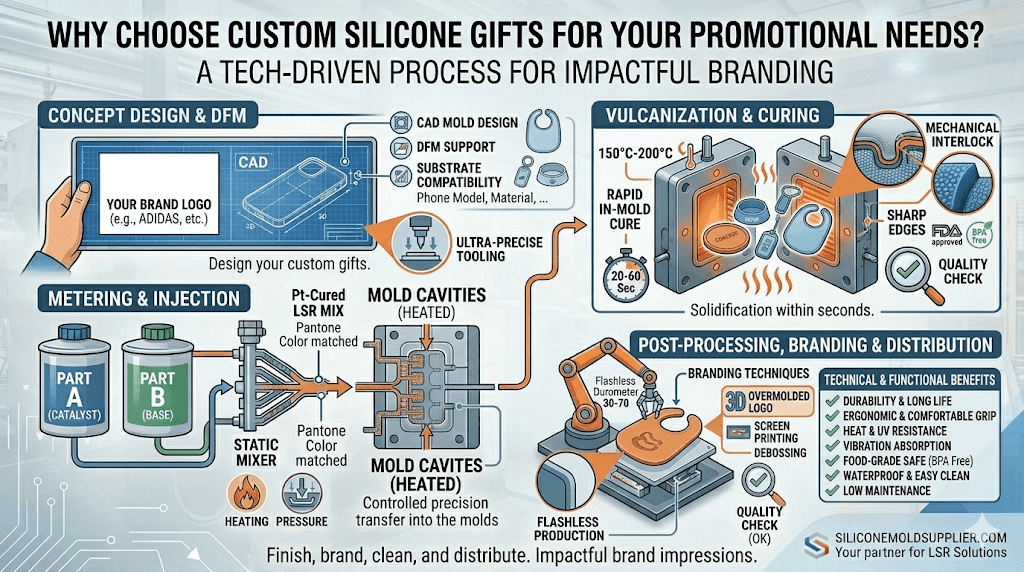
Finding branded merchandise that escapes the junk drawer and delivers a lasting brand impression is a persistent challenge for marketers. Low-cost, generic items often fail to reflect a company’s commitment to quality, resulting in wasted marketing spend and a missed opportunity to connect with clients. To truly stand out, you need a solution that is […]
Defining a BPA-Free Silicone Toy Manufacturer: Beyond the Basics
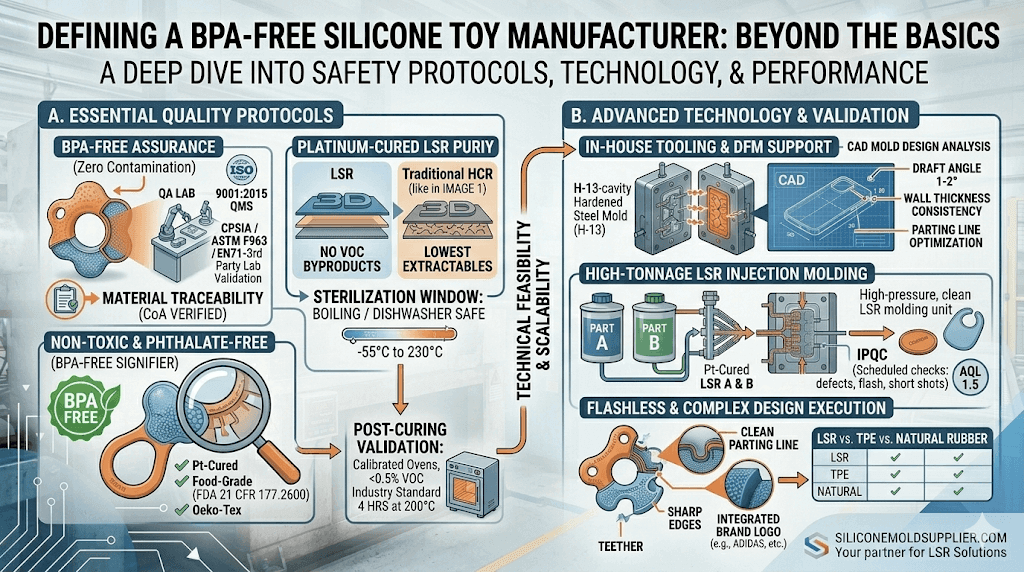
Sourcing components for children’s toys demands zero tolerance for material safety failures. The challenge isn’t just finding a supplier, but securing a true BPA-free silicone toy manufacturer who understands the stringent protocols required to prevent cross-contamination and guarantee part-to-part consistency for sensitive applications. Partnering with a manufacturer who lacks this deep expertise risks costly non-compliance […]
What are Custom Silicone Parts and How Are They Made?
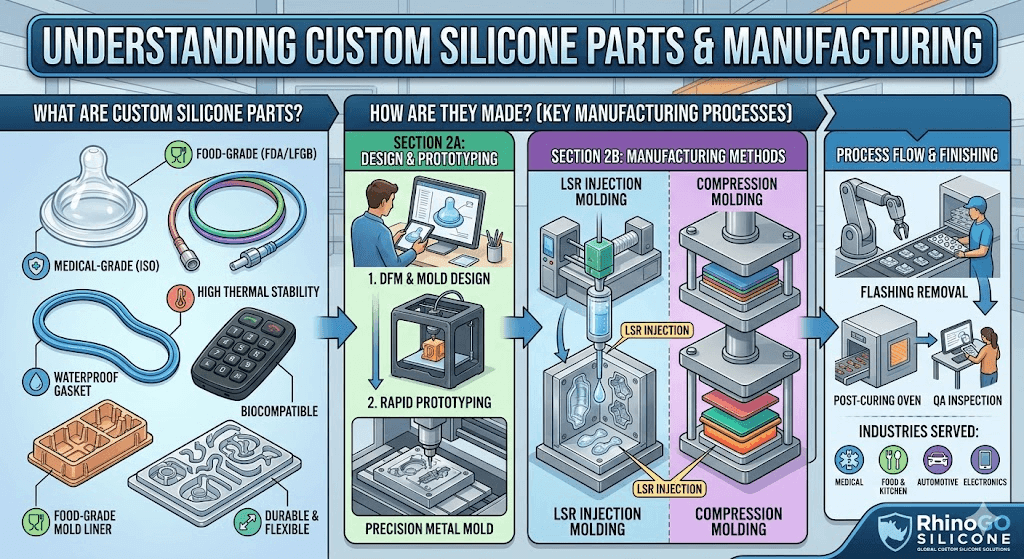
When designing a new product, its performance can be limited by a standard component that almost fits, almost works, or almost withstands a critical environment. These near-misses can lead to compromised function, warranty claims, and costly redesigns, all because an off-the-shelf part cannot meet specific operational demands. Relying on generic seals, gaskets, or housings for […]
What Is Custom Silicone Rubber and How Is It Processed?
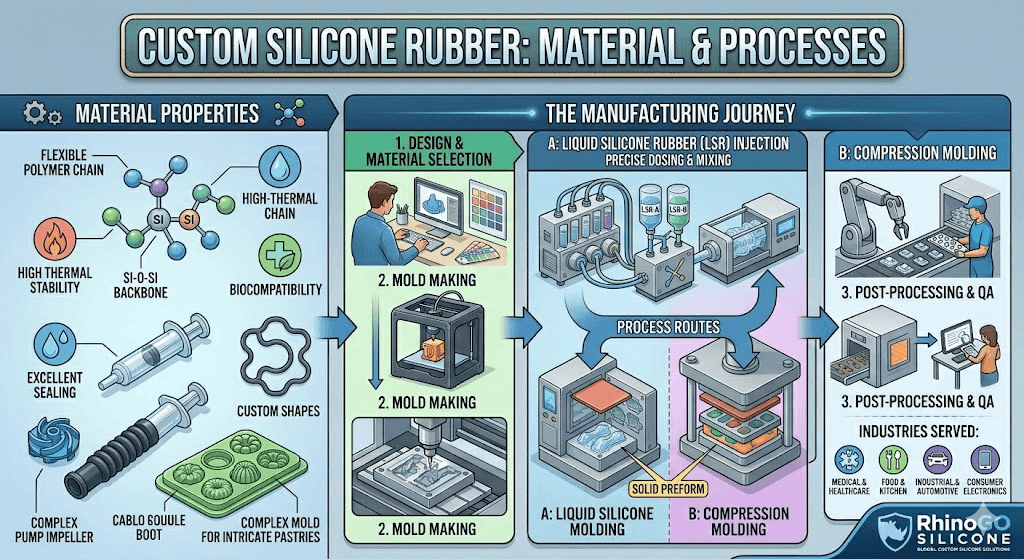
Your team has designed an innovative product, but a single component is holding back the launch: a standard, off-the-shelf seal that fails under operational stress. This common bottleneck can lead to costly redesigns, project delays, and performance compromises. Using a non-optimized part introduces a predictable point of failure into your assembly. Sourcing an optimized component […]
Understanding the Technical Composition of a 3D Silicone Heat Transfer Label
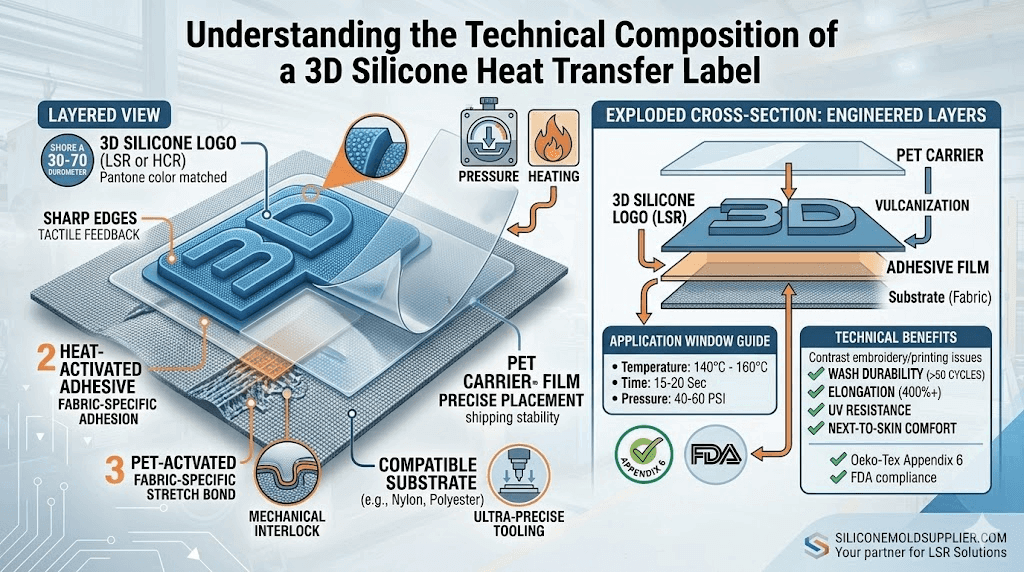
Traditional branding methods like screen printing and embroidery often fail to meet the durability and flexibility demands of modern performance apparel. Cracking, peeling, and fading after a few wash cycles can diminish a product’s perceived value and lead to customer dissatisfaction. A 3d silicone heat transfer label addresses these failure points by providing a tactile, […]
Exploring the Manufacturing Process of a Silicon Mobile Cover Customized for Your Brand
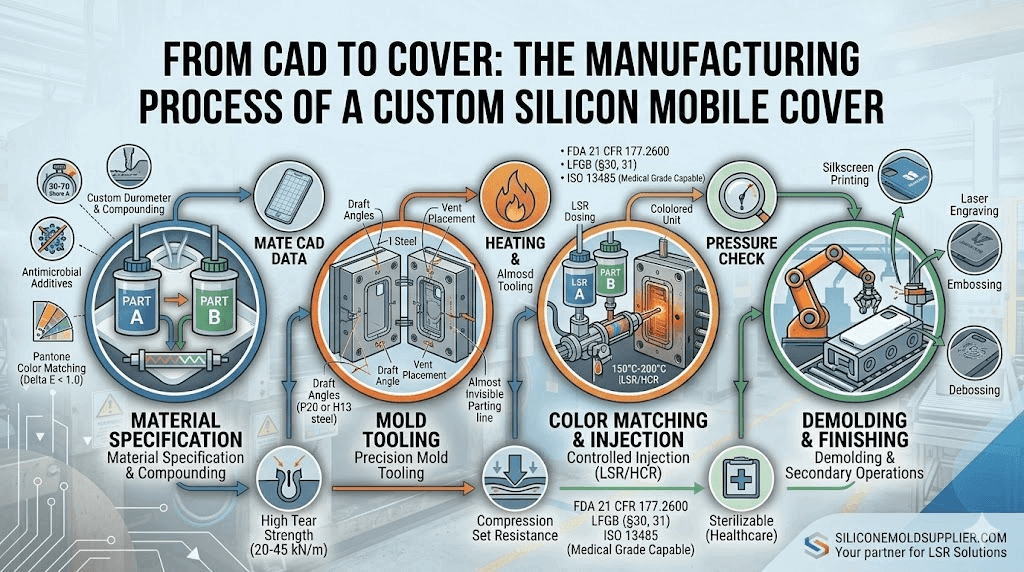
Off-the-shelf solutions often fail to meet the precise functional and branding requirements for proprietary enterprise devices. A generic case can compromise port access, obscure critical features, or misrepresent your brand’s quality standards. Sourcing a silicone mobile cover customized for your equipment is an engineering challenge demanding a perfect fit, specific material performance, and absolute brand […]
Understanding the Technicals: What is Flashless Molding?
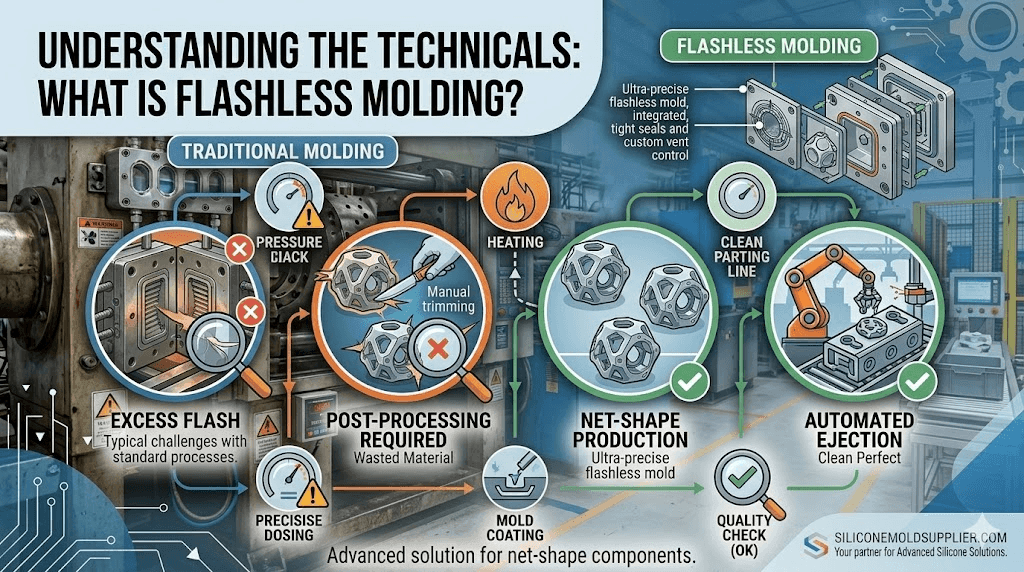
For engineers and product designers, inconsistent part quality and hidden costs can derail a project. Conventional molding often produces flash—excess material that requires expensive, time-consuming secondary removal operations. This de-flashing process not only risks damaging intricate components and compromising tight tolerances but also creates production bottlenecks that drive up the total cost per part. Flashless […]
What is Overmolding Silicone? A Technical Process Breakdown
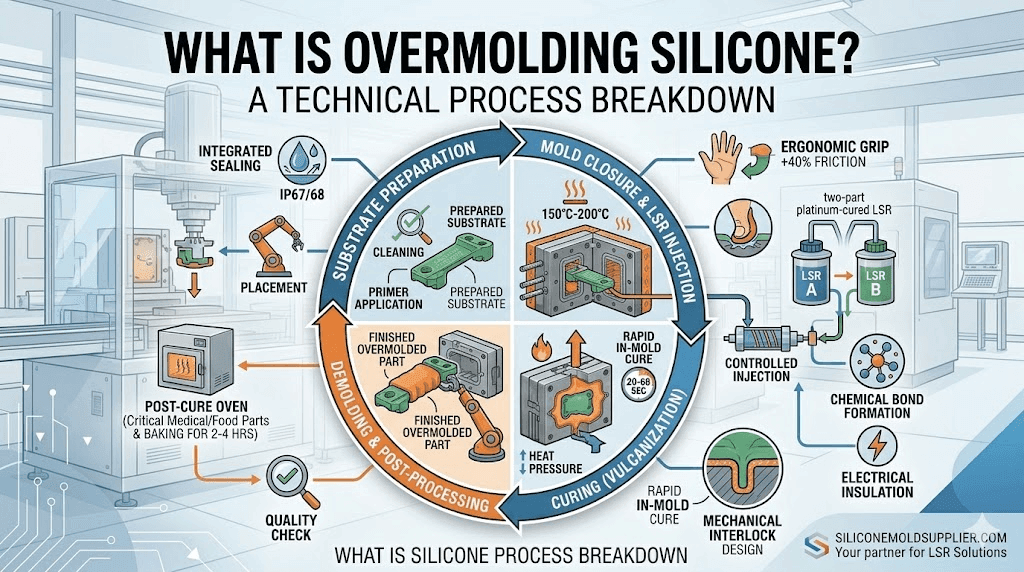
Product designers often face the challenge of creating a single component that requires both rigid structural integrity and soft, flexible characteristics. Whether it’s a waterproof seal on an electronic housing, a soft-touch ergonomic grip on a medical device, or vibration dampening for an automotive part, combining dissimilar materials can add assembly costs and potential failure […]
How to Optimize Product Performance Through Custom Silicone Engineering
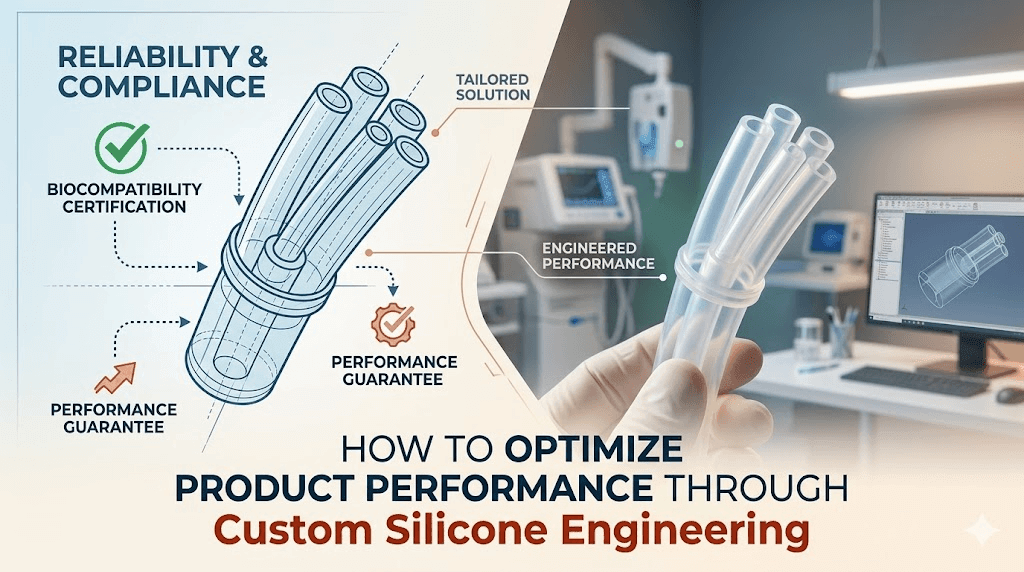
Your new medical device just passed every mechanical test, but it failed biocompatibility certification. The culprit? An off-the-shelf silicone tube that leached uncertified plasticizers, sending your project back weeks and adding thousands in re-testing costs. This is the hidden risk of “close enough” components. When your application has unique chemical, thermal, or mechanical demands, a […]
Defining Custom Silicone Rubber Parts: From Concept to Component
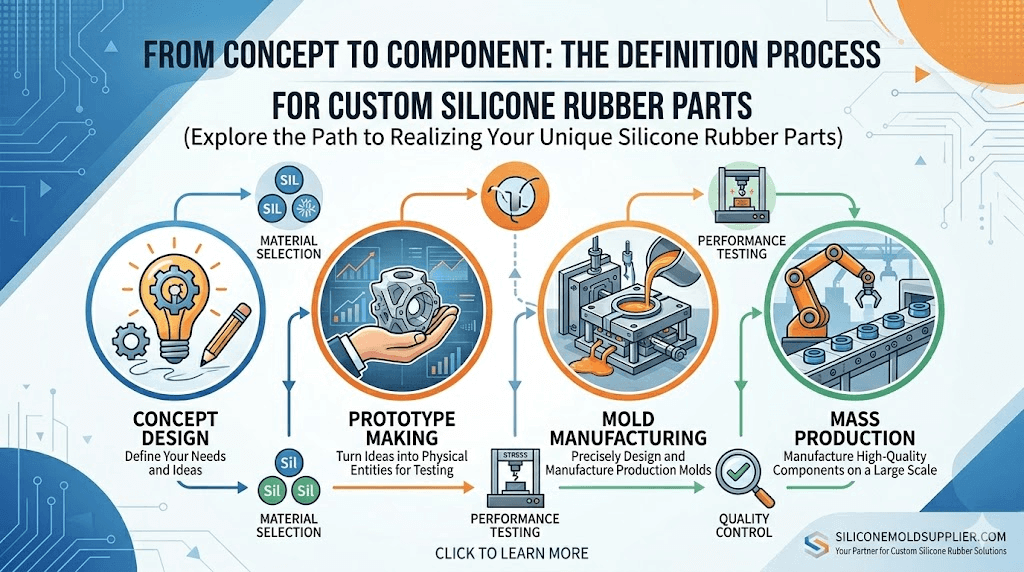
Your product design is finalized, but a standard, off-the-shelf seal will not work. Using a generic component in a specialized application often creates a failure point, which can compromise performance and lead to costly field failures. When your design demands a unique geometry, specific material properties, or performance under extreme conditions, the most reliable solution […]